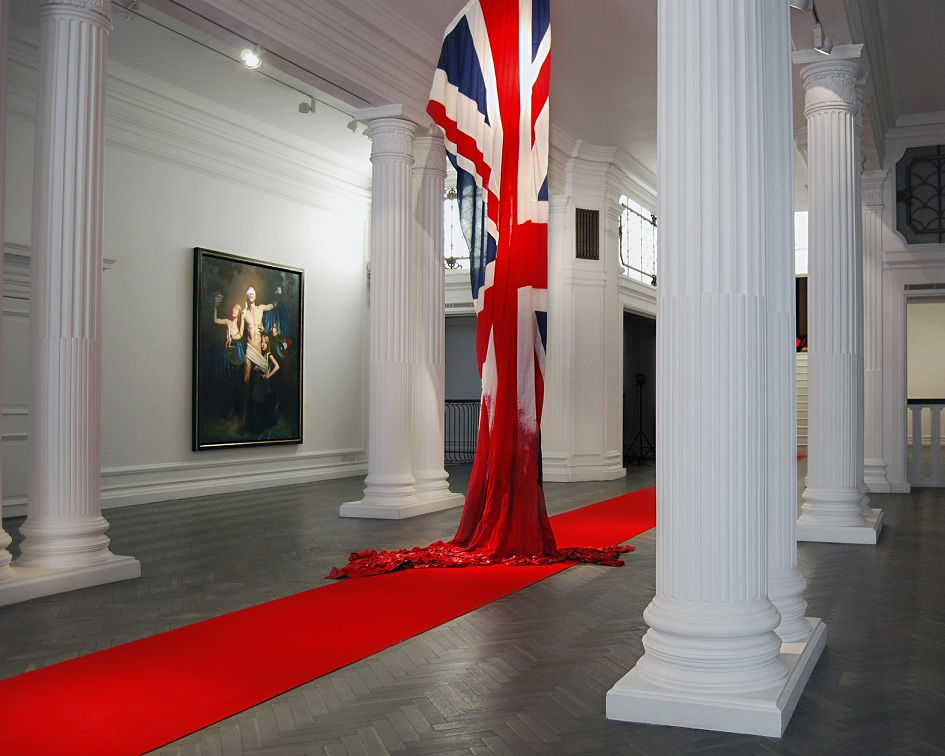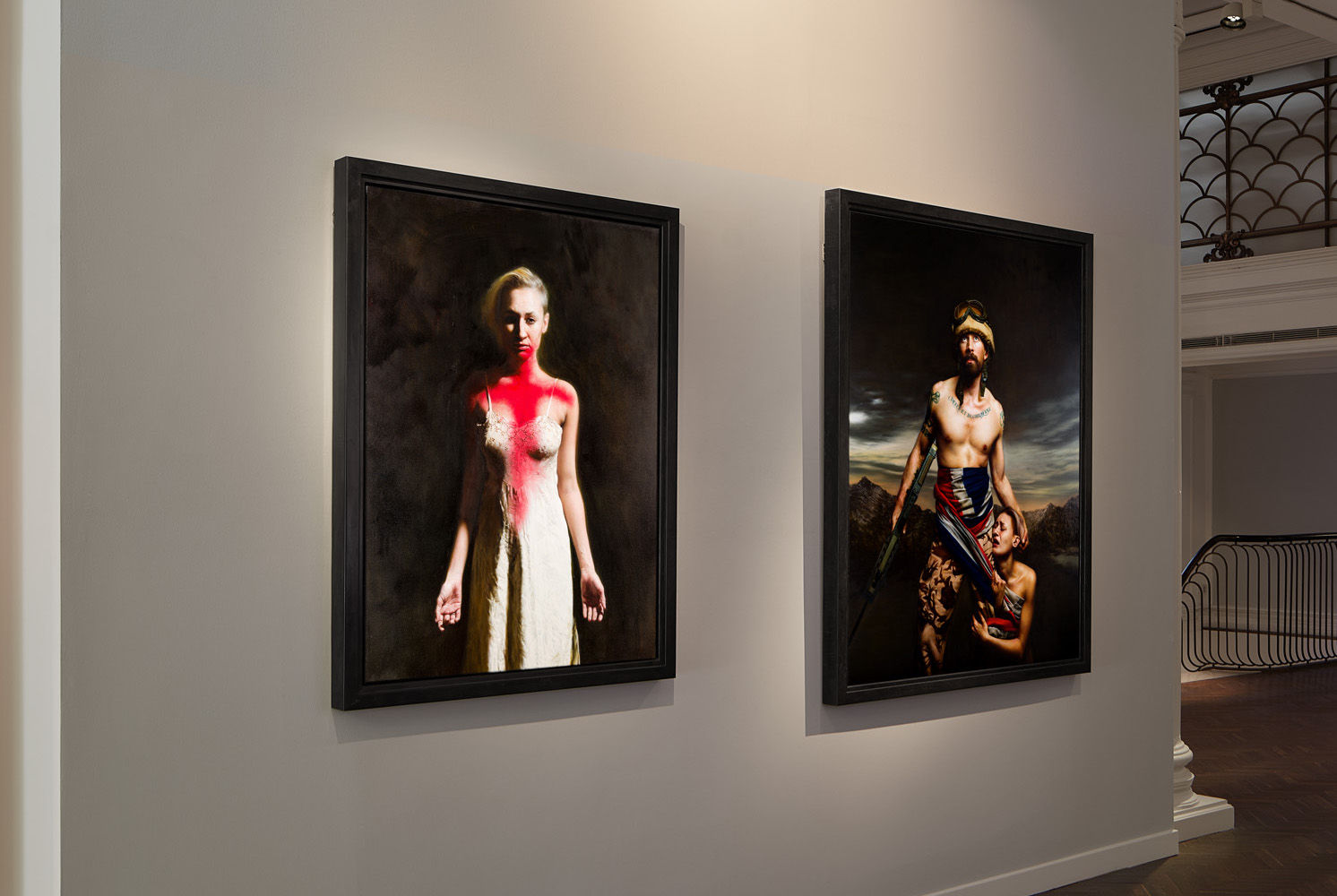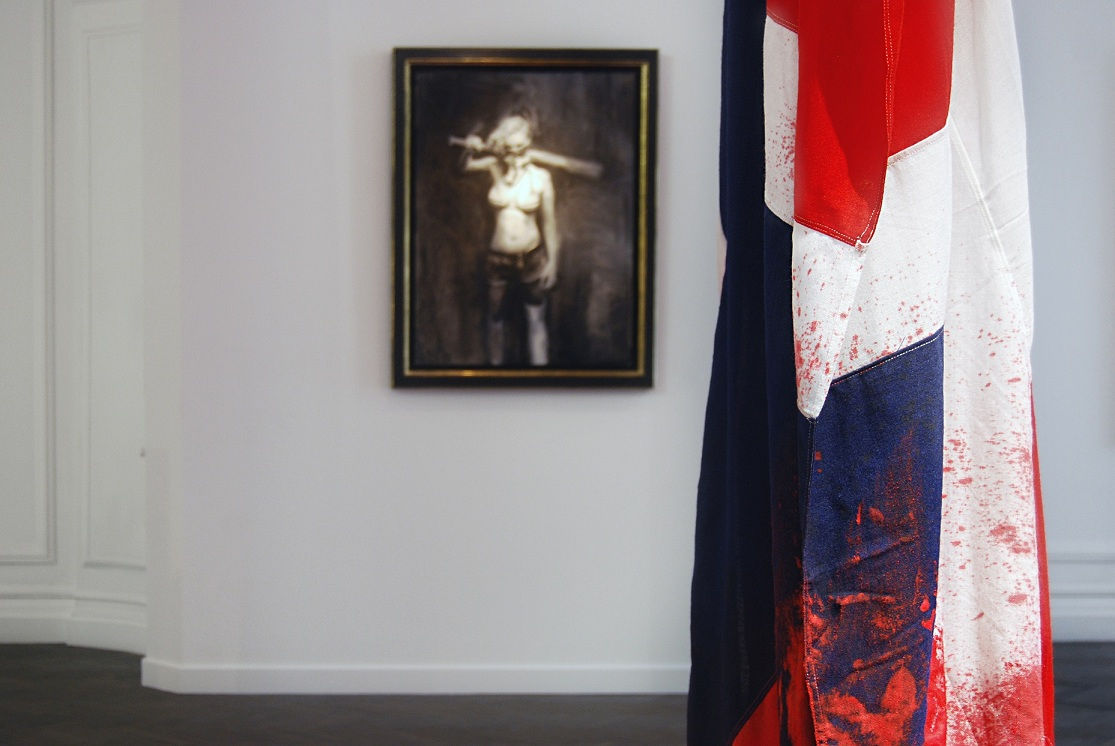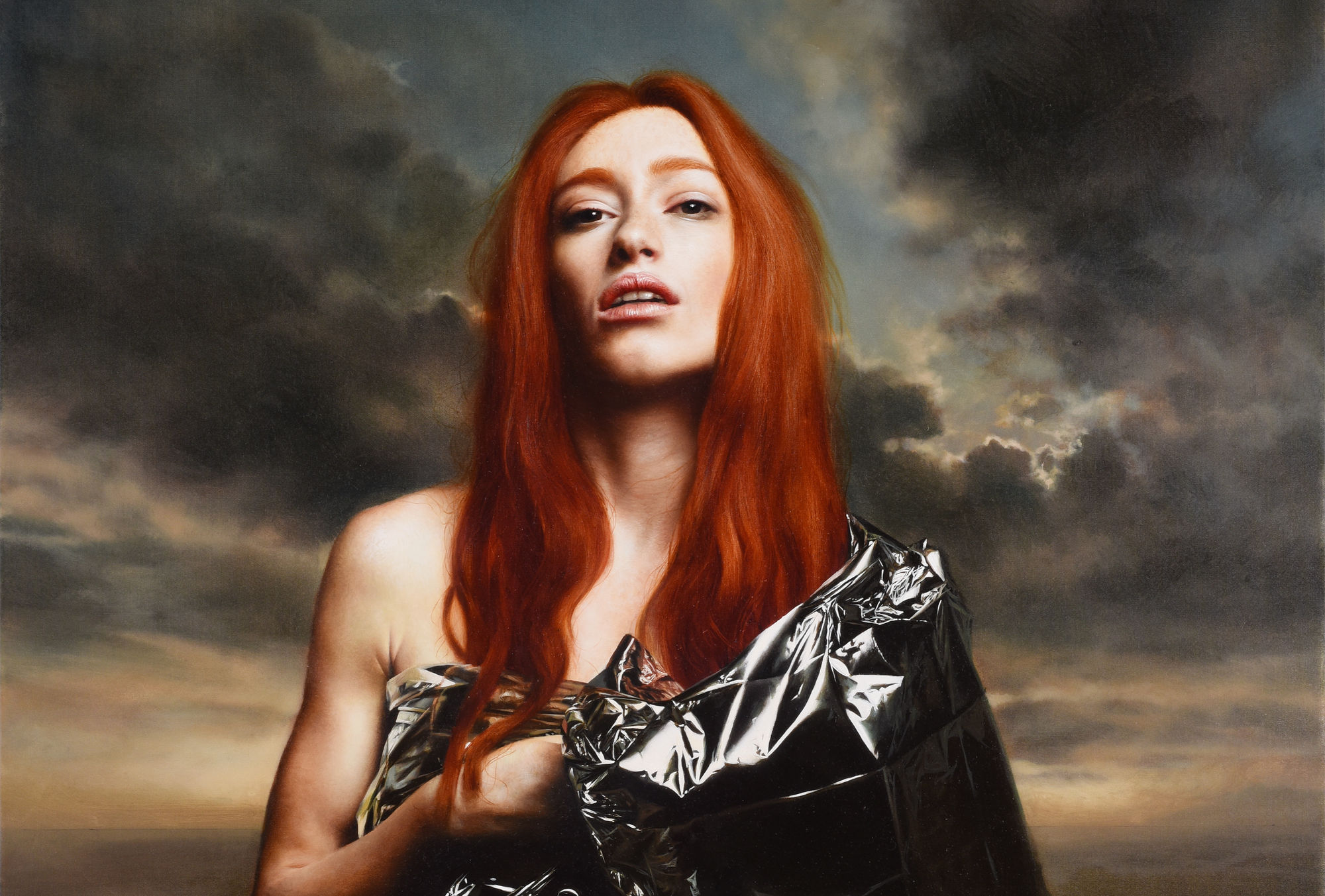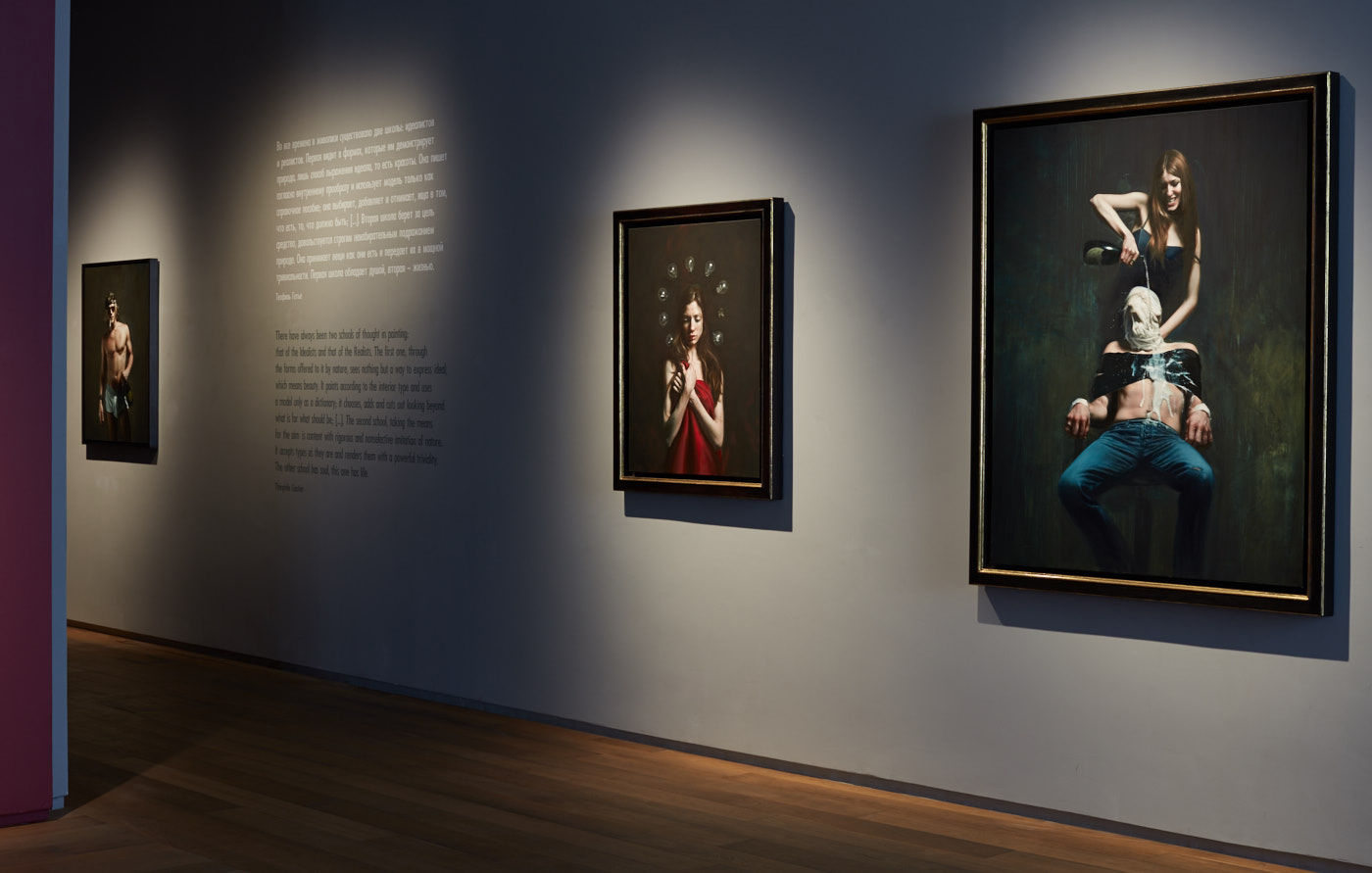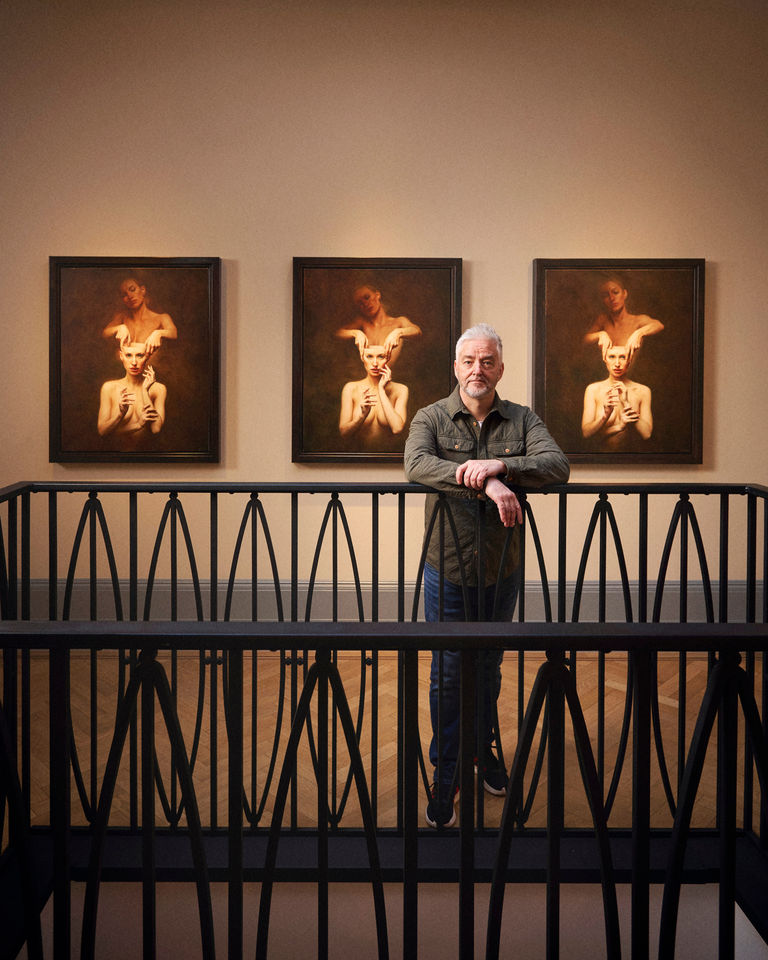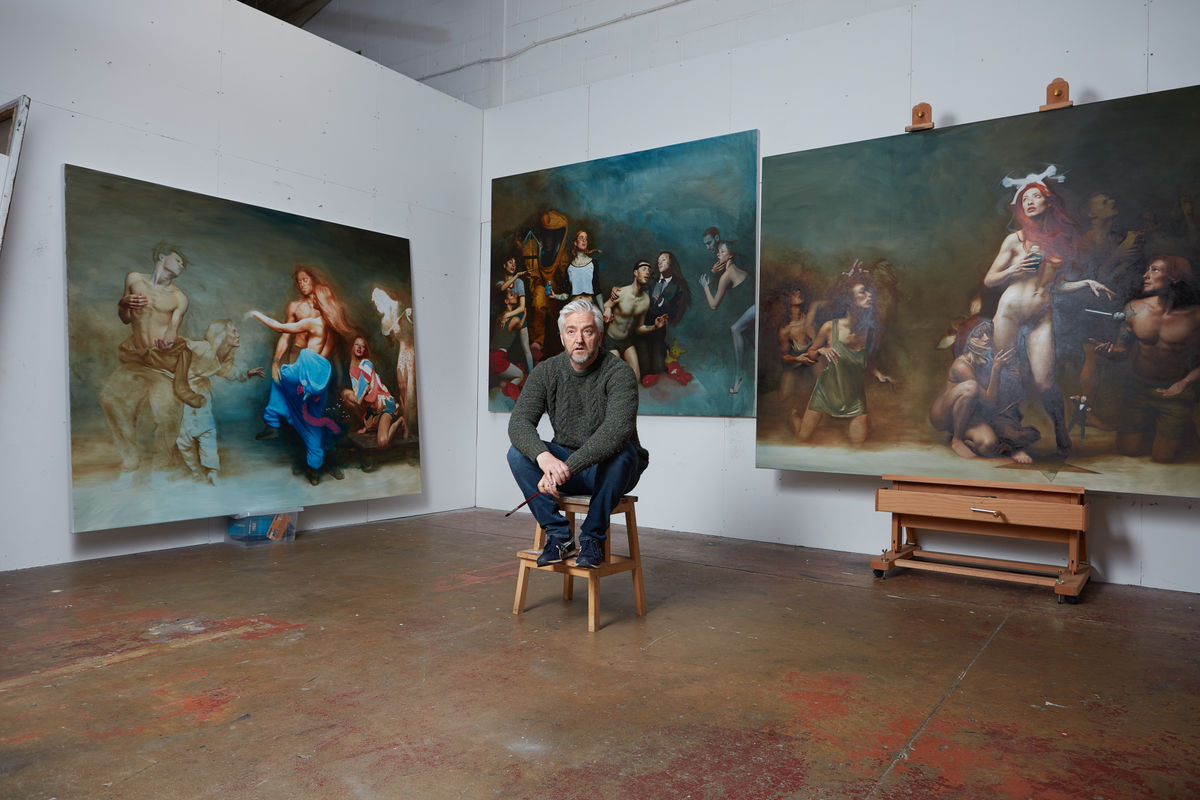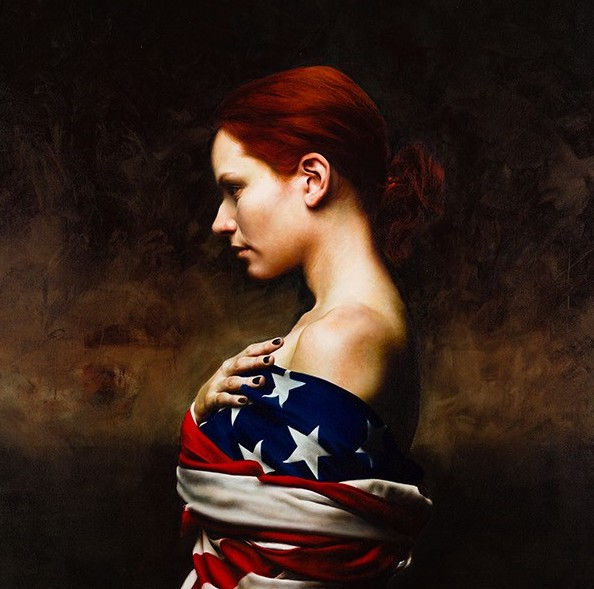
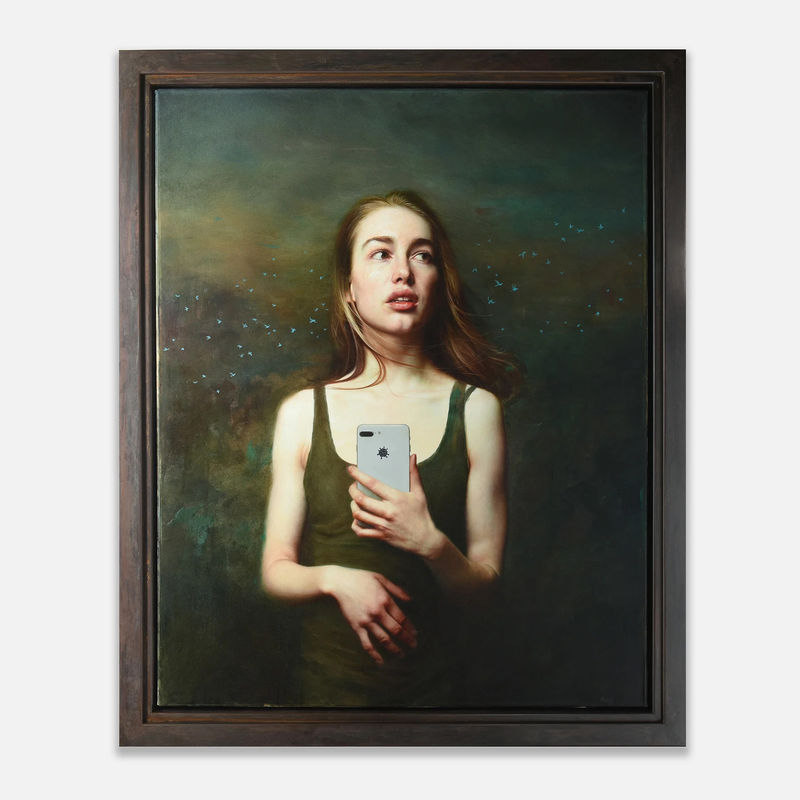
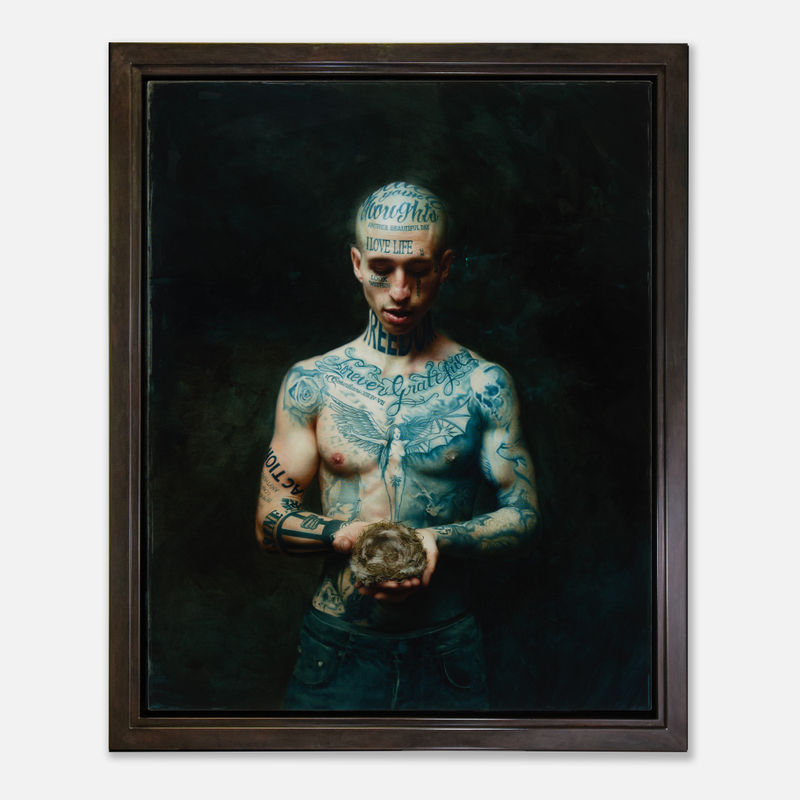
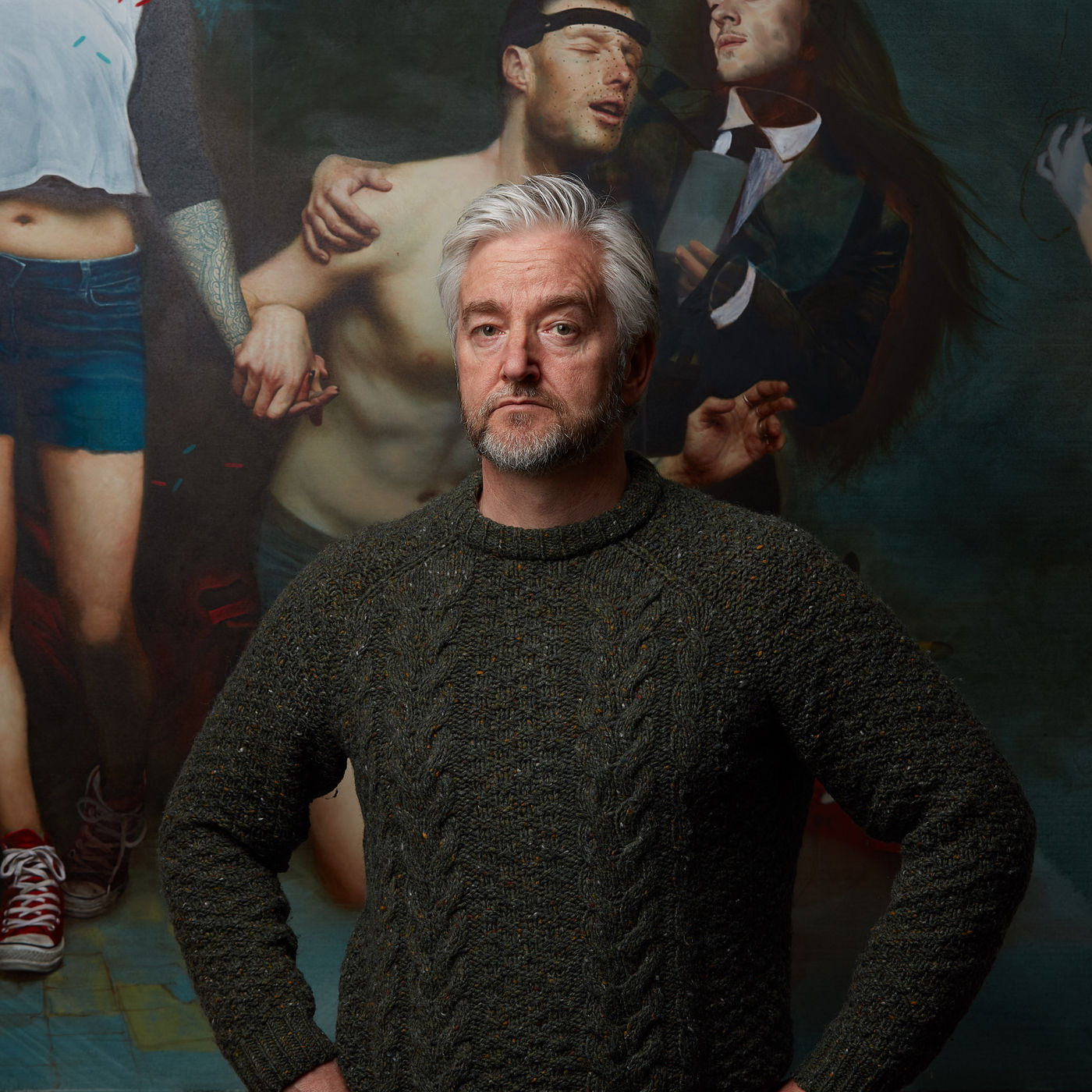
Mitch’s detailed, figurative paintings are bluntly honest with a skill and complexity common in paintings of the Old Masters. His large size canvases contain a narrative and energy that express his anxieties about modern life in a symbolic and illustrative way. Astonishingly self-taught, Mitch’s portraits are extremely captivating and contemporary. To find out more about Mitch Griffiths visit his website www.mitchgriffiths.com
Mitch Griffiths
British, b. 1971
Painting in oils in a glossy, realistic style, Griffiths produces troubling modern portraits that address issues of identity and inclusion, obsolescence and conflict. ‘Many people say my paintings look photo-realist’, he says, ‘but it's not what I'm trying to achieve. I'm trying to make the viewer enter MY reality.’[1]
Mitch Griffiths was born in Nuneaton in 1971 and had an early passion for drawing that was fostered by his school, which he represented in various art competitions. Planning for a career in art, he enrolled at South Devon College, completing a diploma in graphic design in 1987. This was followed by a higher national diploma in illustration at Southampton Institute. His initial work as a commercial illustrator, on projects that ranged from magazine covers to murals, was supplemented by a variety of temporary jobs, such as sheet metal work, which brought in more reliable income.
Griffiths’ first artistic success came unexpectedly in 1994. An avid boxing fan, he painted a portrait of Chris Eubank and sent a photograph of it to Eubank’s agent, Barry Hearn. The boxer was delighted with the piece, wanting to use the image to promote his matches, and he initially commissioned a series of pictures and then offered Griffiths a job. Eubank became his patron for the next three years, setting up a studio for him at his business centre in Hove.
Through Eubank, Griffiths met the entrepreneur Terry Johnson, who owned a luxury retreat in Cornwall called Hustyns, where many boxers trained. Griffiths became artist-in-residence and for the next five years created over 100 paintings to be displayed at the centre. He also helped to set up the Bishop Phillpotts Gallery in Truro, Cornwall, holding three solo exhibitions there in 2001 and 2002.
During these years Griffiths’ distinctive style of figurative painting in oils began to emerge. He immersed himself in the culture of the Old Masters,[2] reading widely on art history and making frequent visits to London’s museums to examine seminal works. Returning to his studio, he would try out their painting techniques, their composition and lighting, toiling until he had honed his abilities to a level where he could replicate and then advance creatively from his models. ‘His pictorial language is not so much old-fashioned as reborn out of the pervasive and at times almost pornographic vividness and in-your-face quality of much of our current visual culture’, explains Philip Wright.[3]
While his artistic language owes a debt to the past, in content Griffiths rigorously addresses the issues of the twenty-first century. Large, complex canvases, packed with detail, expose the immoralities and pretences of our time. Many of his images appear to echo familiar religious iconography. However, their symbolism reflects a modern quest for redemption – from the overriding self-obsession and consumerism of contemporary society, with its vanity and greed, addictions and needless suffering.
In 2001 Griffiths entered the National Portrait Gallery BP Portrait Award with Armoured Heart. The piece was chosen for the exhibition's promotional poster, which resulted in wide exposure for his work across London. His first solo show in London was mounted at the Enid Lawson Gallery in Kensington in 2002. During this period Halcyon Gallery became one of his favourite haunts, following an exhibition of work by the painter Robert Lenkiewicz that caught his interest. A chance conversation with a gallery representative and an opportunity to show the sketchbook he was carrying resulted in what has become an enduring creative collaboration; Halcyon Gallery started permanently representing Griffiths in 2004.
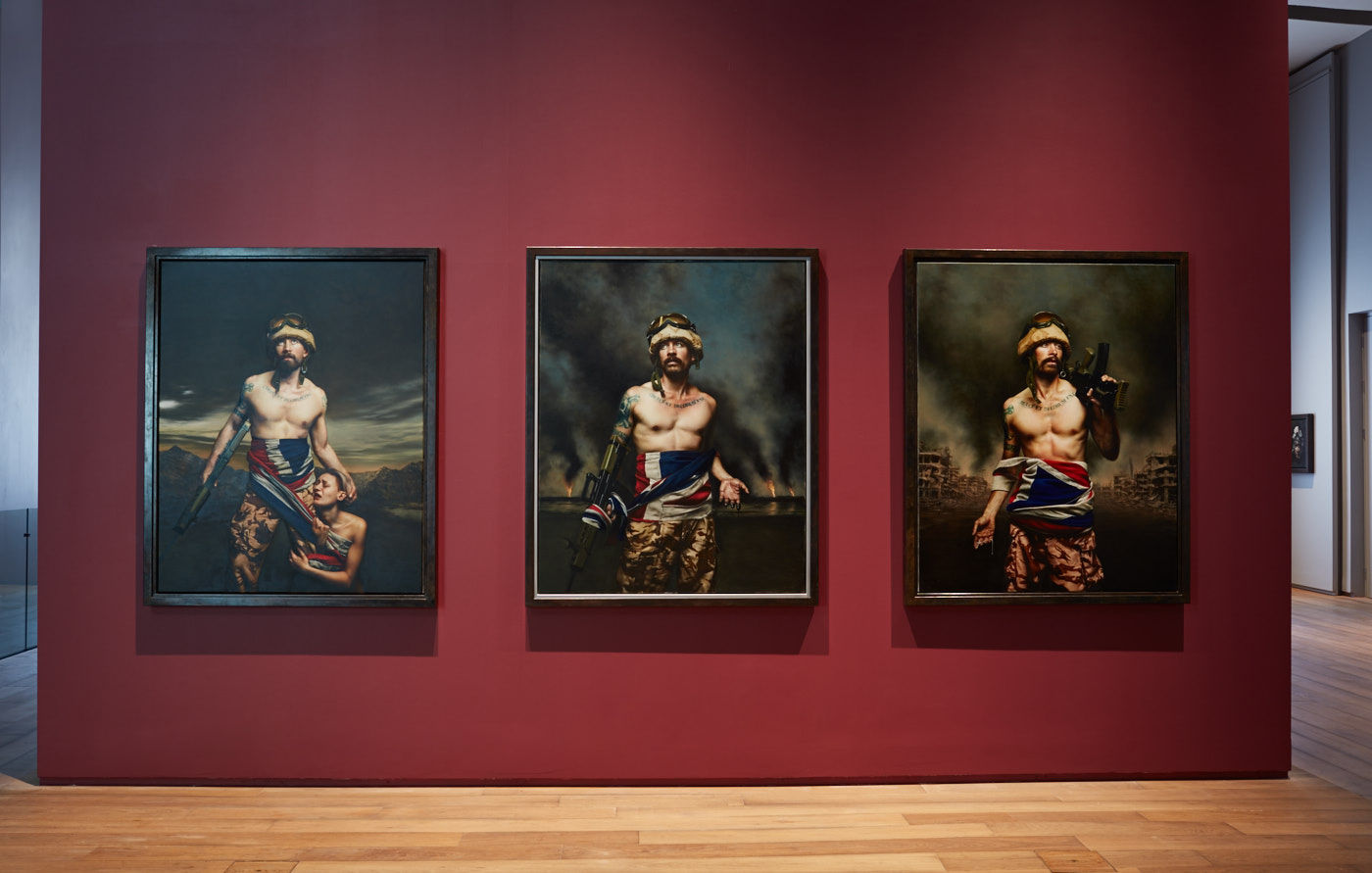
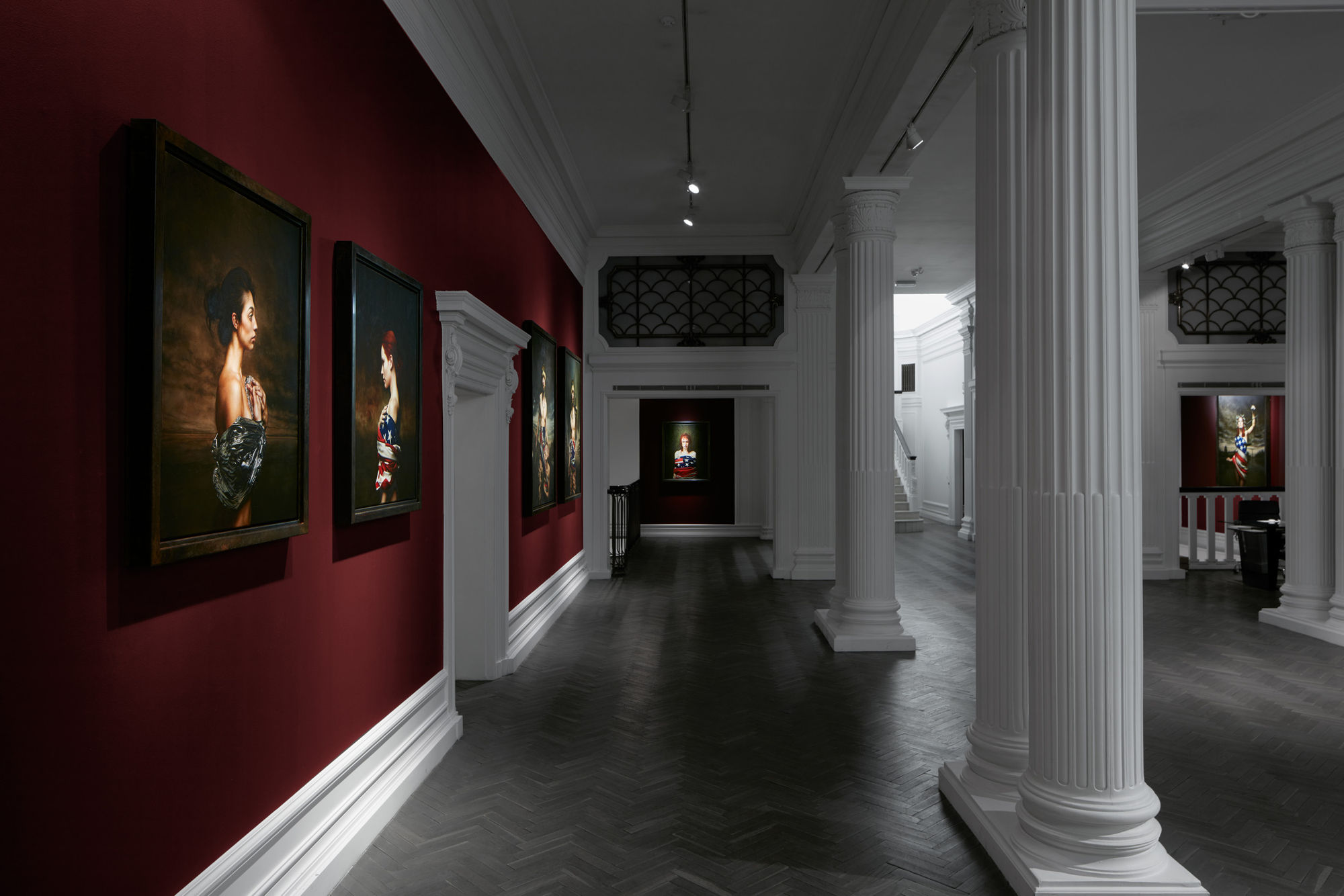
His first show at the gallery, Reality (2006), examined the power of brand names in such works as Twenty-first Century Boy – a portrayal of a figure in Calvin Klein underpants with a Coca-Cola trademark branded into his skin. Credit cards encircle the man’s head like a crown of thorns, and his chest and arms bear cut marks that suggest self-harm. The Promised Land (2010), another major solo show, exhibited 25 paintings that delve into the pain and contradictions of modern British life. Griffiths took the Union Jack as a recurrent theme, wrapping figures in it to raise provocative questions about patriotism and identity. He drew attention to society’s fixation on appearance in The Fitting Room, to its voyeurism and inconstancy in The Muse is Dead.
Griffiths is preparing a new exhibition for 2012: Iconostasis takes its concept from the screen of icons dividing the sanctuary from the nave of an Eastern Orthodox church. He sees parallels with the way magazine covers and mobile-phone screens separate us from modern idols, and will feature portraits of such famous figures as Ray Winstone, Sir Bob Geldof and Keira Knightley.
[1] Amah-Rose McKnight-Abrams, ‘Mitch Griffiths’ Promised Land’, published on 23 April 2010 at dazeddigital.com.
[2] The term ‘Old Masters’ refers to skilled European painters pre-1800; it derived from the title of Master awarded by a local artists’ guild.
[3] Foreword to The Promised Land exhibition catalogue (London, 2010).
Mitch Griffiths produces modern paintings that address issues of identity and inclusion, obsolescence and conflict.
The finest figurative paintings by our gallery artists will be on show at our 24 Bruton Street
gallery until 29 Januar...